Translating Hydrogel Technology into Novel Engineered Liver
Tissues
The development of three-dimensional (3-D) microenvironments for the growth of liver tissue would facilitate the study of hepatitis virus infections in a more natural environment. Moreover, due to the lack of adequate in vitro models for liver tissue, hepatoxicity in patients typically becomes evident only very late in the process of drug development. Thus, an improved tissue culture platform that promotes 3-D growth of liver tissues could result in the development of more clinically effective antivirals, as well as tissues that can possibly be transplanted into patients.
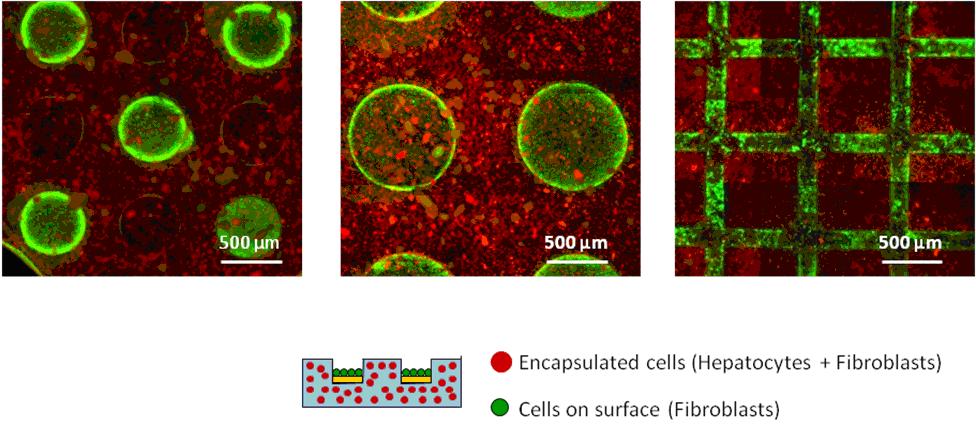
Our studies focus on using non-toxic poly(ethylene glycol) di-acrylate (PEG-DA) hydrogels to mimic the 3-D microenvironment structure. Preliminary findings have reported the successful encapsulation of human progenitor and liver-derived cells in these hydrogel networks, which have provided us with the opportunity to study HCV infection in a more natural environment. Future work will focus on using this platform to evaluate antiviral candidates.
The development of three-dimensional (3-D) microenvironments for the growth of liver tissue would facilitate the study of hepatitis virus infections in a more natural environment. Moreover, due to the lack of adequate in vitro models for liver tissue, hepatoxicity in patients typically becomes evident only very late in the process of drug development. Thus, an improved tissue culture platform that promotes 3-D growth of liver tissues could result in the development of more clinically effective antivirals, as well as tissues that can possibly be transplanted into patients.
Our studies focus on using non-toxic poly(ethylene glycol) di-acrylate (PEG-DA) hydrogels to mimic the 3-D microenvironment structure. Preliminary findings have reported the successful encapsulation of human progenitor and liver-derived cells in these hydrogel networks, which have provided us with the opportunity to study HCV infection in a more natural environment. Future work will focus on using this platform to evaluate antiviral candidates.
As part of
this body of work, we also plan to further study the design parameters of the
hydrogel network. Photolithography methods will be employed to create hydrogel
structures that mimic the spatial organization found in the natural liver.
In addition, we plan to incorporate accessory biologic factors such as
extracellular matrix proteins, stromal cells, and growth factors in order to
promote advanced differentiation of liver-specific structures and
markers.
Nam-Joon
Cho's