Investigation of the Hepatitis C Virus with Biomimetic Sensor
Platforms
The hepatitis C virus (HCV) is an important worldwide cause of chronic liver disease, infecting over 150 million people. Current treatment for HCV is based on interferon and ribavirin, which are associated with significant toxicities and suboptimal efficacy for many patients, highlighting the need for new therapies. My ongoing postdoctoral research has developed novel, engineering-based approaches to advance our knowledge of hepatitis C virology and drug development.
HCV Molecular Virology
The 9.6 kb HCV genome is a positive single-stranded RNA that encodes for a ~3000 amino acid polyprotein. The latter is proteolytically processed by cellular and viral proteases into structural (components of the mature virus) and non-structural (NS) proteins (involved in virus replication). Our attention has been focused on understanding the fundamental macromolecular interactions of three specific nonstructural proteins (NS4B, NS5A, NS5B) in order to define new targets for HCV therapy.
The hepatitis C virus (HCV) is an important worldwide cause of chronic liver disease, infecting over 150 million people. Current treatment for HCV is based on interferon and ribavirin, which are associated with significant toxicities and suboptimal efficacy for many patients, highlighting the need for new therapies. My ongoing postdoctoral research has developed novel, engineering-based approaches to advance our knowledge of hepatitis C virology and drug development.
HCV Molecular Virology
The 9.6 kb HCV genome is a positive single-stranded RNA that encodes for a ~3000 amino acid polyprotein. The latter is proteolytically processed by cellular and viral proteases into structural (components of the mature virus) and non-structural (NS) proteins (involved in virus replication). Our attention has been focused on understanding the fundamental macromolecular interactions of three specific nonstructural proteins (NS4B, NS5A, NS5B) in order to define new targets for HCV therapy.

Like other
positive-strand RNA viruses, HCV is believed to replicate in association with
cytoplasmic membranes, although how the RNA replication complex is assembled and
maintained remains to be elucidated. My early postdoctoral work focused on
two proteins, NS4B and NS5A, which have critical roles in the HCV life
cycle-NS4B mediates the assembly of components in the HCV replication complex
and NS5A is necessary for HCV replication. Strikingly, both proteins
contain an N-terminal amphipathic helix that promotes their tight association
with intracellular membranes. I have employed bottom-up (i.e. model lipid
bilayers) and top-down (i.e. cell-derived membranes) approaches to study
membrane association of synthetic peptides derived from these helices.
Given the key roles of these specific helices in mediating NS4B and NS5A
membrane association, they have great potential to be successful targets for
future antiviral therapies.
More recently, in collaboration with Roche, my studies have concentrated on establishing assays for the measurement of HCV replicase assembly and identification of the mechanism of action of specific inhibitors against new targets. The project's goals are threefold: 1) to determine the mechanism of action of new hits derived from cell-based HCV replicon screens, 2) to establish screening assays for the discovery of novel classes of replicase inhibitors, and 3) to identify novel viral and cellular targets for drug discovery. Specifically, I am currently investigating the kinetics of, and conformational changes associated with, membrane association of the HCV NS5B protein.
Identification of Small Molecule HCV Inhibitors
Although some recently discovered anti-HCV agents have encouraging activity in vitro and in vivo, resistance to these drugs develops rapidly, precluding their use as monotherapies. Like HIV and tuberculosis, effective pharmacologic control of HCV is expected to require a cocktail of multiple agents, each targeting an independent virus-specific function. Hence, we have sought to identify novel classes of drugs to include in such future cocktails.
Expression of the HCV NS4B protein alone has been reported to be sufficient for the creation of the membranous web, a membrane structure that represents the platform for membrane-associated HCV RNA replication. However, the molecular mechanism(s) whereby NS4B might promote membrane rearrangements or vesicle aggregations that make up the membranous web are largely unknown. In addition to previous identification of an N-terminal amphipathic helix (AH) within NS4B that is necessary for membrane association, we have genetically validated a novel target within NS4B that is essential for enabling genome replication. This target consists of a second AH that was found to mediate NS4B oligomerization and synthetic lipid vesicle aggregation.
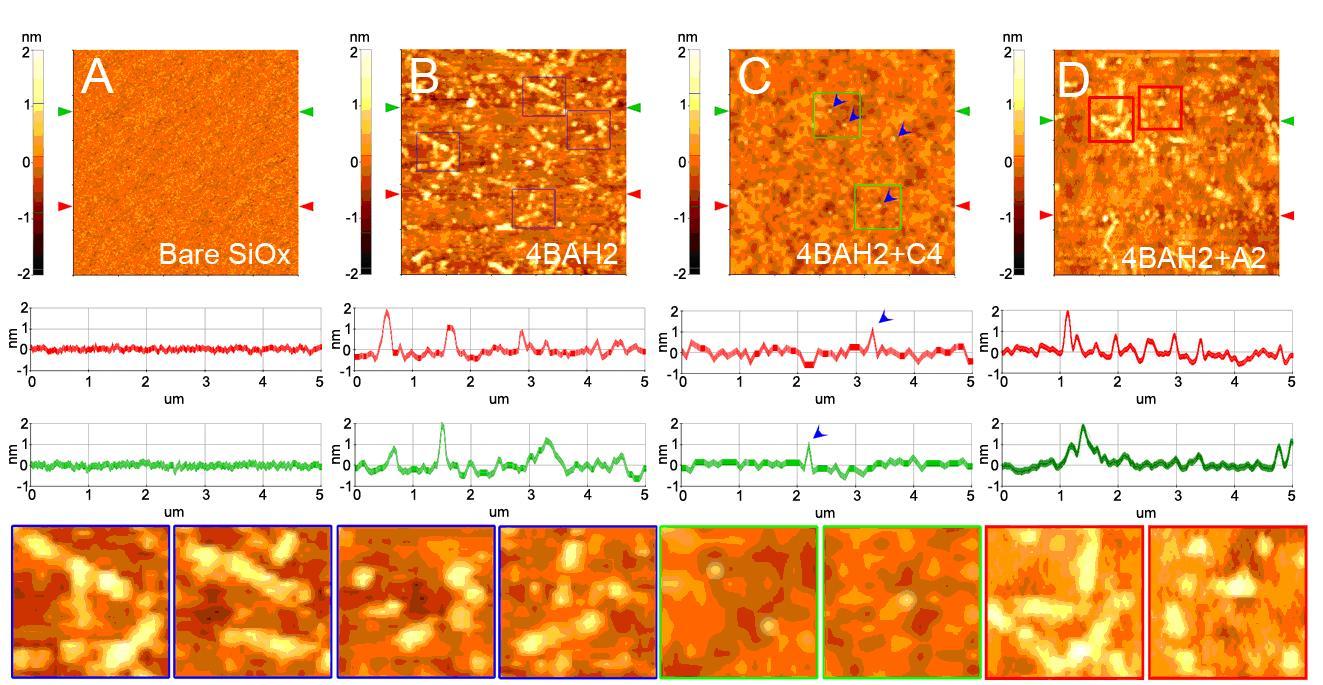
We exploited the latter AH peptide's ability to induce lipid vesicle aggregation in order to perform a high-throughput screen that identified a variety of small molecules capable of inhibiting this nonbiologic activity as well as HCV RNA replication. Detailed analysis of selected inhibitors with biomimetic sensing platforms led to the identification of their mechanism of action. The inhibitors showed genotype-specific anti-HCV activity, thereby validating the effectiveness of these novel, engineering-based approaches to study HCV genotypes for which a cell culture system does not currently exist.
More recently, in collaboration with Roche, my studies have concentrated on establishing assays for the measurement of HCV replicase assembly and identification of the mechanism of action of specific inhibitors against new targets. The project's goals are threefold: 1) to determine the mechanism of action of new hits derived from cell-based HCV replicon screens, 2) to establish screening assays for the discovery of novel classes of replicase inhibitors, and 3) to identify novel viral and cellular targets for drug discovery. Specifically, I am currently investigating the kinetics of, and conformational changes associated with, membrane association of the HCV NS5B protein.
Identification of Small Molecule HCV Inhibitors
Although some recently discovered anti-HCV agents have encouraging activity in vitro and in vivo, resistance to these drugs develops rapidly, precluding their use as monotherapies. Like HIV and tuberculosis, effective pharmacologic control of HCV is expected to require a cocktail of multiple agents, each targeting an independent virus-specific function. Hence, we have sought to identify novel classes of drugs to include in such future cocktails.
Expression of the HCV NS4B protein alone has been reported to be sufficient for the creation of the membranous web, a membrane structure that represents the platform for membrane-associated HCV RNA replication. However, the molecular mechanism(s) whereby NS4B might promote membrane rearrangements or vesicle aggregations that make up the membranous web are largely unknown. In addition to previous identification of an N-terminal amphipathic helix (AH) within NS4B that is necessary for membrane association, we have genetically validated a novel target within NS4B that is essential for enabling genome replication. This target consists of a second AH that was found to mediate NS4B oligomerization and synthetic lipid vesicle aggregation.
We exploited the latter AH peptide's ability to induce lipid vesicle aggregation in order to perform a high-throughput screen that identified a variety of small molecules capable of inhibiting this nonbiologic activity as well as HCV RNA replication. Detailed analysis of selected inhibitors with biomimetic sensing platforms led to the identification of their mechanism of action. The inhibitors showed genotype-specific anti-HCV activity, thereby validating the effectiveness of these novel, engineering-based approaches to study HCV genotypes for which a cell culture system does not currently exist.
Antiviral
Peptide Screening Platform
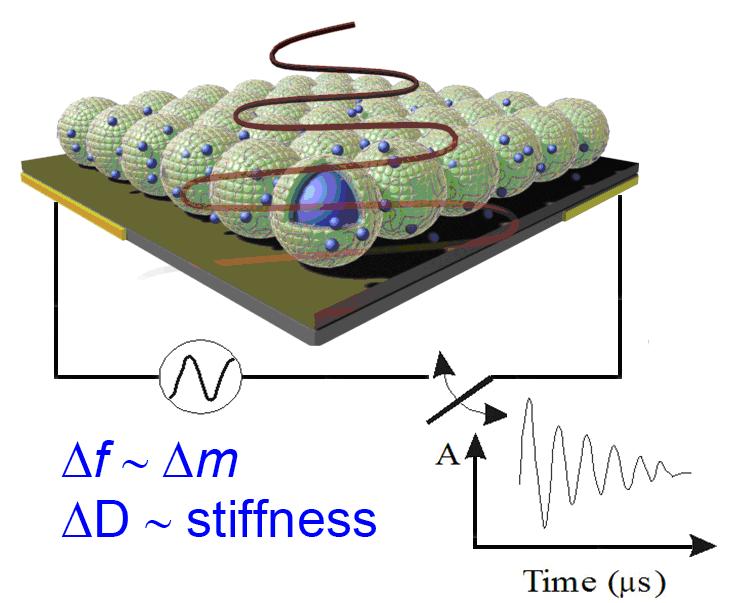
While studying the binding interaction of the HCV NS5A-derived AH peptide with model and cell-derived membranes, we discovered a surprising property of this AH peptide: its ability to induce lysis of lipid vesicles as well as virus particles, thereby inhibiting de novo HCV infection. We have sought to better understand the AH peptide's mode of action in order to translate this activity into a clinical antiviral therapy. Recent work with a biomimetic screening platform has demonstrated that the AH peptide's lysis activity against lipid membrane-bound virus particles exhibits a size dependence that falls within the range of a number of medically viruses. Present and future studies together with Professor Gregory Verdine of Harvard University are focused on developing stitched and stapled variants of the AH peptide that demonstrate increased stability while retaining similar levels of rupturing activity, thus increasing the AH peptide's potential clinical efficacy. Further, we are interested in applying the screening platform to evaluate other antiviral peptide candidates.
While studying the binding interaction of the HCV NS5A-derived AH peptide with model and cell-derived membranes, we discovered a surprising property of this AH peptide: its ability to induce lysis of lipid vesicles as well as virus particles, thereby inhibiting de novo HCV infection. We have sought to better understand the AH peptide's mode of action in order to translate this activity into a clinical antiviral therapy. Recent work with a biomimetic screening platform has demonstrated that the AH peptide's lysis activity against lipid membrane-bound virus particles exhibits a size dependence that falls within the range of a number of medically viruses. Present and future studies together with Professor Gregory Verdine of Harvard University are focused on developing stitched and stapled variants of the AH peptide that demonstrate increased stability while retaining similar levels of rupturing activity, thus increasing the AH peptide's potential clinical efficacy. Further, we are interested in applying the screening platform to evaluate other antiviral peptide candidates.
Nam-Joon
Cho's