-
When do I need to come to class?
CS124 is a flipped class. This means there are mainly recorded lectures and we mostly do labs in class! Note that the 4 live lectures and the 5 labs are not recorded.- Required attendence in Hewlett 200: 6 days : the first ("intro") lecture (week 1), lab #1 (week 2), my NLP for public good lecture (Week 4), Dora Demszky's guest lecture (Week 6), lab #5 (Week 9), my closing lecture (Week 10). These lectures and labs will not be recorded and the material is fair game for the quizzes and the midterm.
- Recommended attendence in Hewlett 200 (and required completion): Lab #2, Lab #3, Lab #4. Attendence at these (non-recorded) labs gives you extra credit but if you want you can skip the extra credit and do them yourself at home.
- Completely optional attendence in Hewlett 200 The 2 tutorial sessions on Jupyter and Numpy. No extra credit, but you should come if you want help with getting set up with PA0 and getting a refresher on jupyter and numpy.
- Online only The midterm and the midterm review day.
- Completely optional attendence in Hewlett 200 Special office hours in Hewlett 200 all the other days!
- There is no final exam. We will not use the scheduled final exam time at all. The last class requirement is the final programming assignment which is due Friday March 15.
- Should I come to class if I am sick? Goodness no, of course not! Stay home and get better and don't make everyone else sick! Mail the staff in advance (see the email below) and they will note that you are sick and give you advice about how to keep up.
-
Can I take this class asynchronously, i.e., if i have another class at the same time?
No. The class must be taken synchronously, so that you have the ability to come to all the 11 in-person class sessions; we have found over the years that the labs are necessary and result in everyone learning more. However, if you have a medical reason why you cannot take the class synchronously, or because you are required to take another class at the same time and you need the classes or else you cannot graduate this quarter, you can ask Dan for explicit permission to take the class asynchronously. The in-person material is not recorded, so if you are taking the class asynchronously, you must do the labs yourself at home, but won't get the extra credit that the folks who come in person will get. Note: this is only for people with medical or must-graduate-this-quarter excuses.
-
Can I audit this class?
No and yes. No because the TAs are very hard-working and their workload helping the almost 400 students each year is assigned by the University based on enrollment, so auditors are asking the TAs to work for free, which isn't reasonable or sustainable. Yes because all the course material is public, and we encourage anyone who wants to learn the material to go through it on their own, as long as they don't ask the TAs to work for them! So that means if you're not in the class we encourage you to watch the videos on YouTube, and do the programming homeworks, but don't submit homeworks or quizzes to be graded, and don't ask questions on Ed that the TAs will need to spend time answering.
-
What are the prereqs?
Prerequisites: CS106B, Python (at the level of CS106A), CS109 (or equivalent background in probability), and programming maturity and knowledge of UNIX equivalent to CS107 (or taking CS107 or CS1U concurrently).
In some previous years CS107 and CS109 were optional. Many students advised us that it would have been helpful to have 107 and 109 first. So now both are required. You may take them concurrently, and if you have equivalent knowledge that's fine. It's also useful to have had Math 51, but not required; we'll try to give you pointers to places to make up missing background. Note: We make exceptions for PhD students in other departments who haven't taken 107 and 109, just talk to us!
-
Can I take this course as a PhD student in a department that isn't CS?:
Yes, we'd love to have non-CS PhDs! This course is not appropriate for CS grad students (because there are CS graduate versions of all the material in this course, i.e. CS224N, 224U, 224V, 224W, 224C, CS246, CS276), but it's very commonly taken by PhD students in the social sciences or humanities who plan to use text processing methods in their research. Feel free to contact us if you're worried whether you have the right background as a PhD student from another department.
-
If I have permission to take the course despite note having CS107 (for example because I am a PhD student in another department), what should I do to catch up with the UNIX background I've missed: Watch some of the "getting start with UNIX" mini-videos from
this old cs107 archive: (1) The "Logging in" videos that are relevant for whatever computer you are using (mac/windows/linux), (2) the first 7 "File System" videos, (3) the first 7 "Useful Commands" videos, (4) the first 3 "Shell/Productivity" videos, and (5) the "Vim" section from "Editors".
-
More details? below. You are responsible for reading this entire syllabus before the 2nd day of
class, January 11! The textbook is free online pdfs mostly here
- Who do I email if I have questions about personal issues or missing class? For personal issues or extenuating circumnstances, mail cs124_requests@lists.stanford.edu. This address will be read by Dan and the head TA and the course manager and coordinator to get you answers about missing classes, or about personal issues like OAE. If you have questions that are in any way technical in nature post them on Ed.
- Most important: Have fun and learn lots!!!!
Welcome to CS124!! Some FAQ
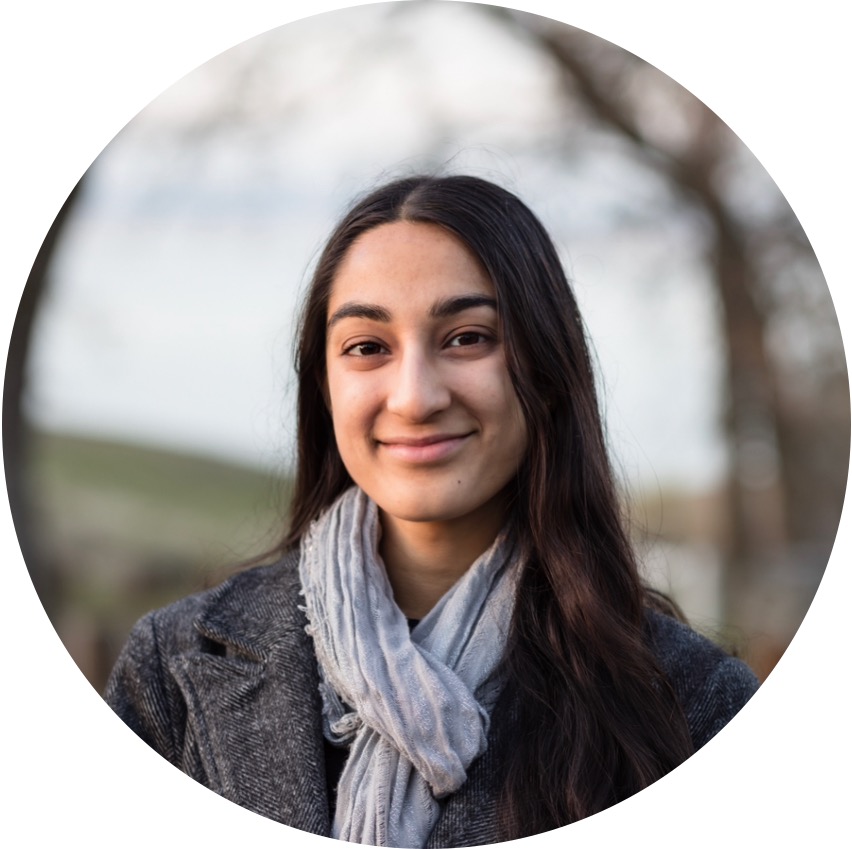
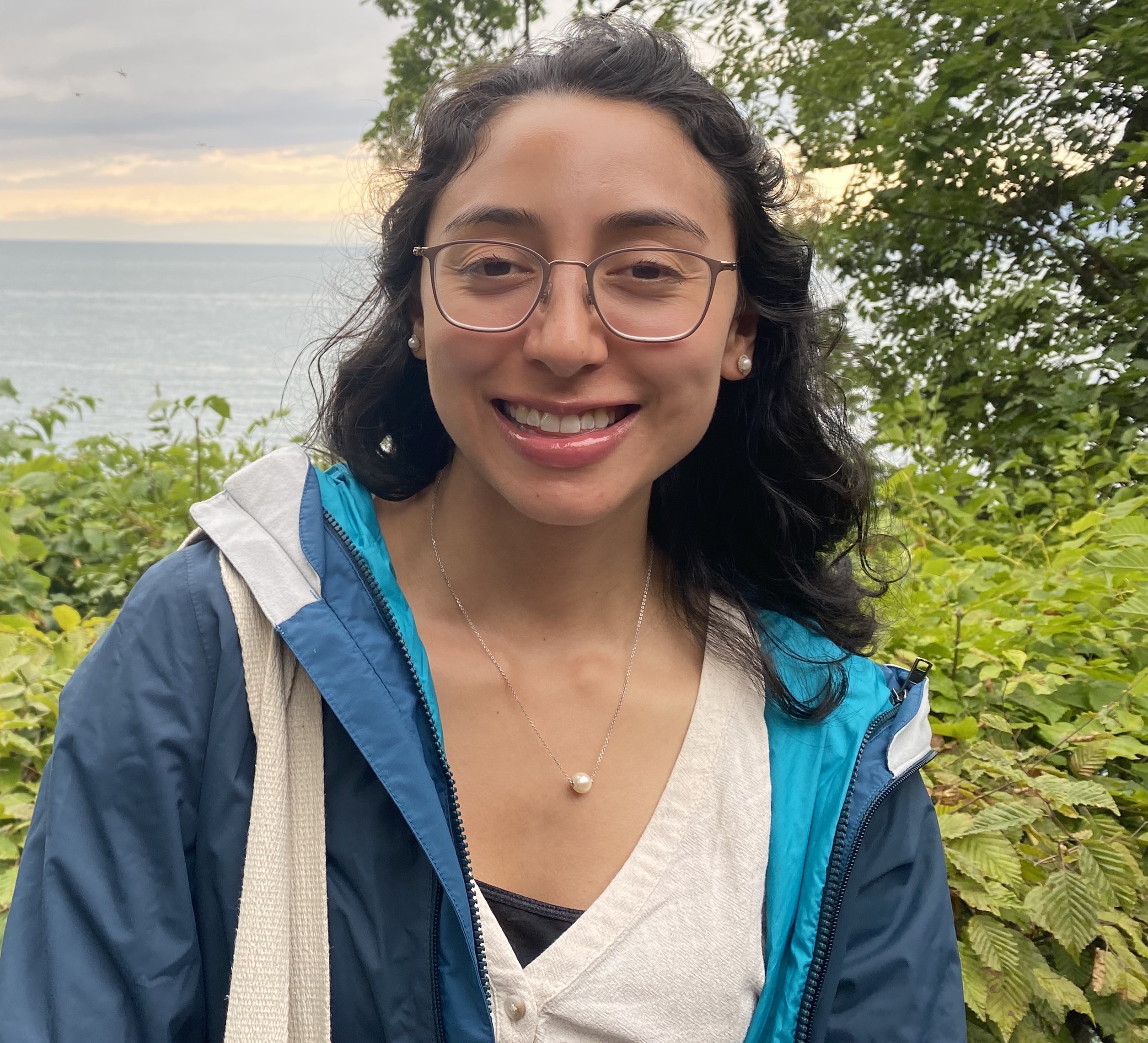
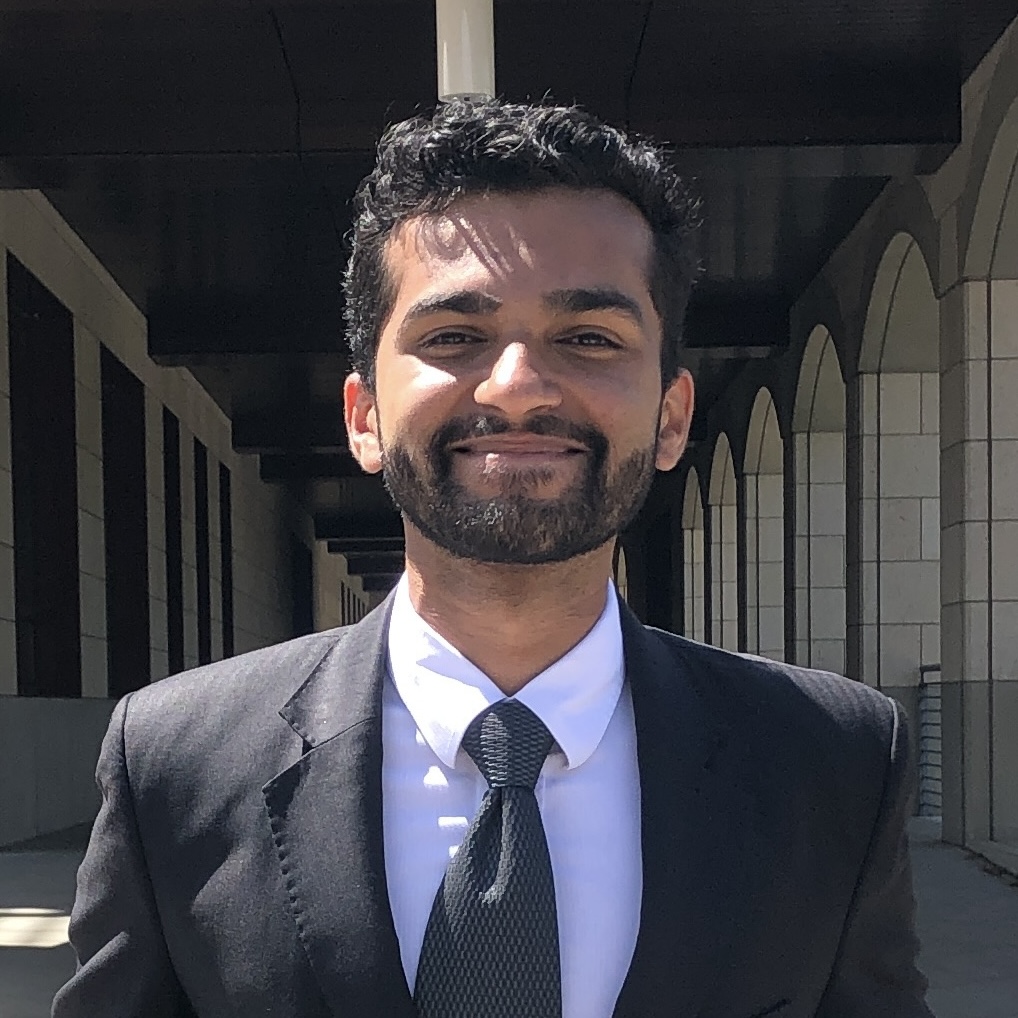
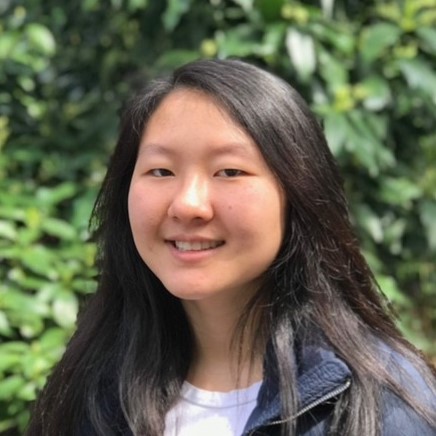
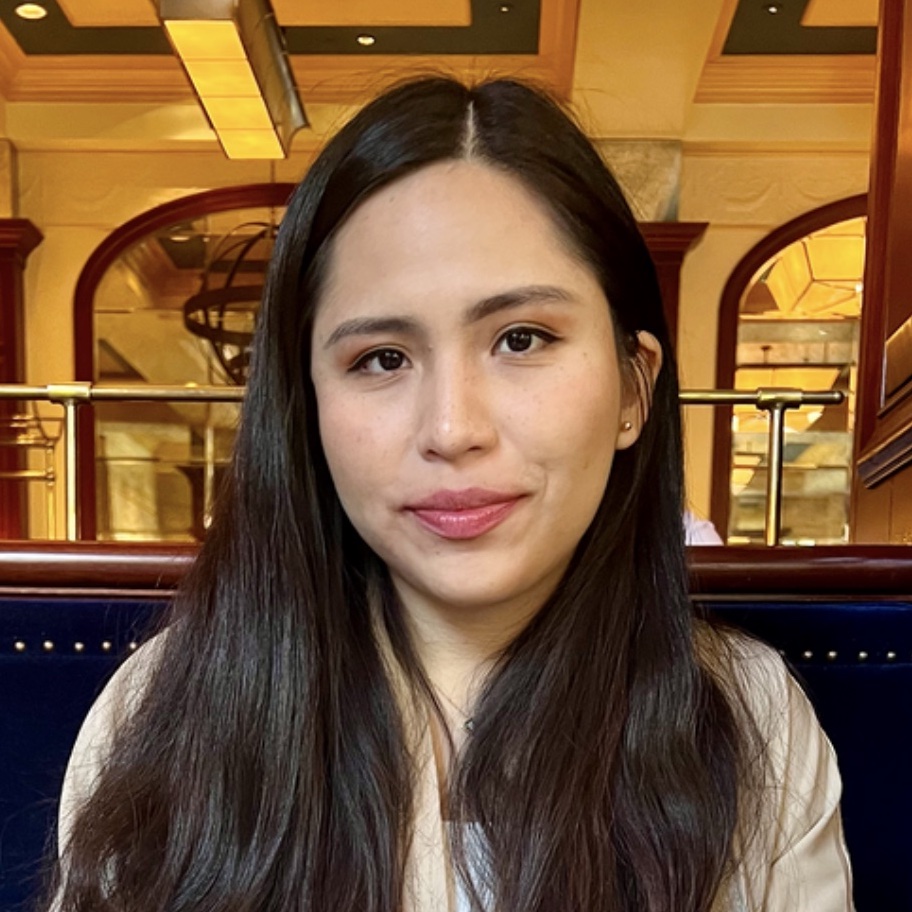
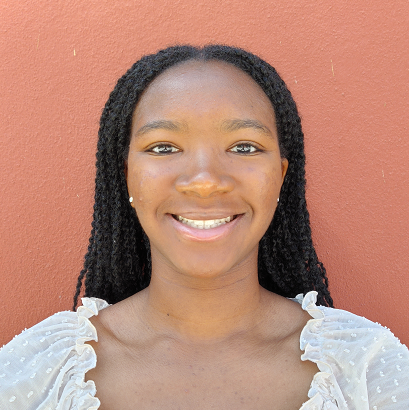
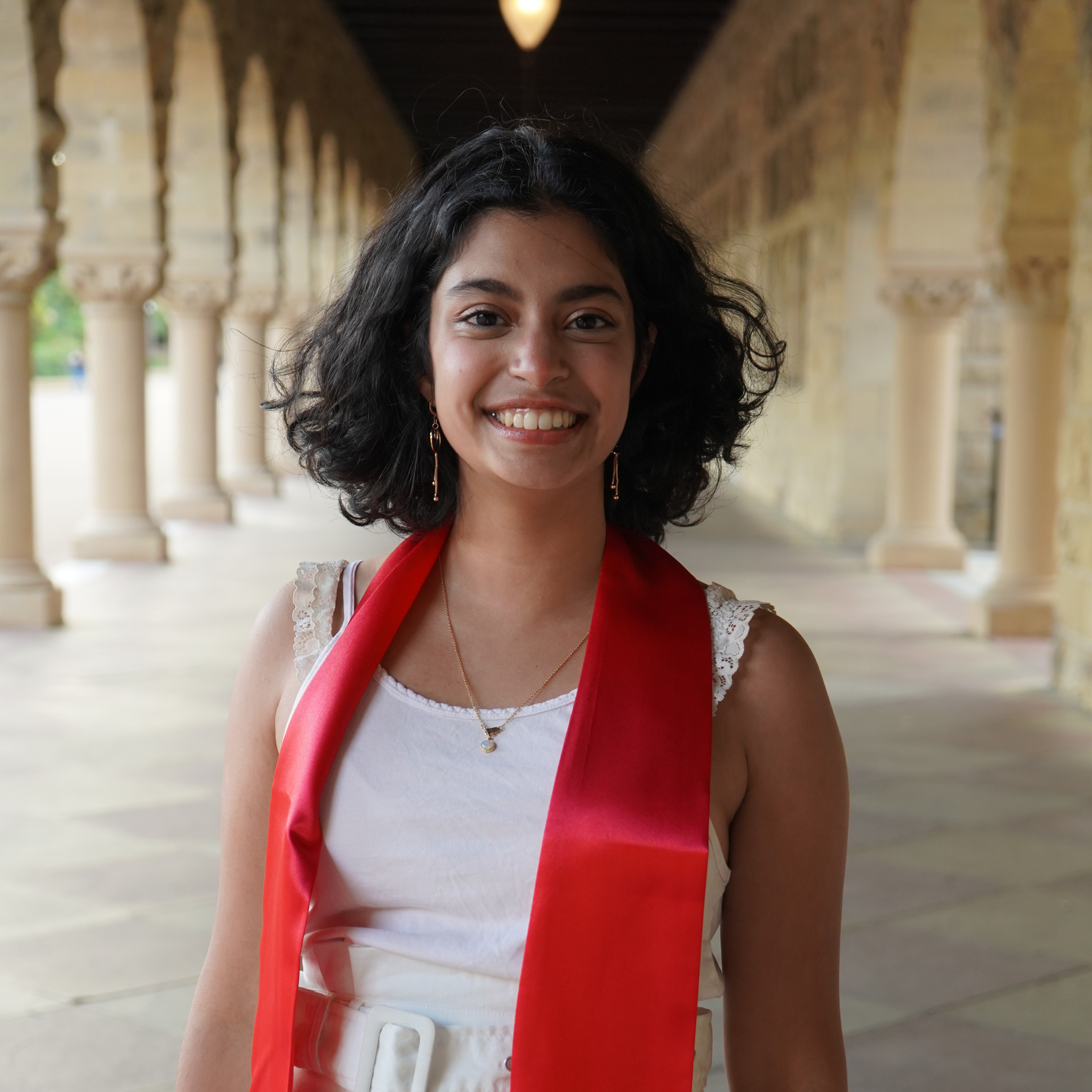
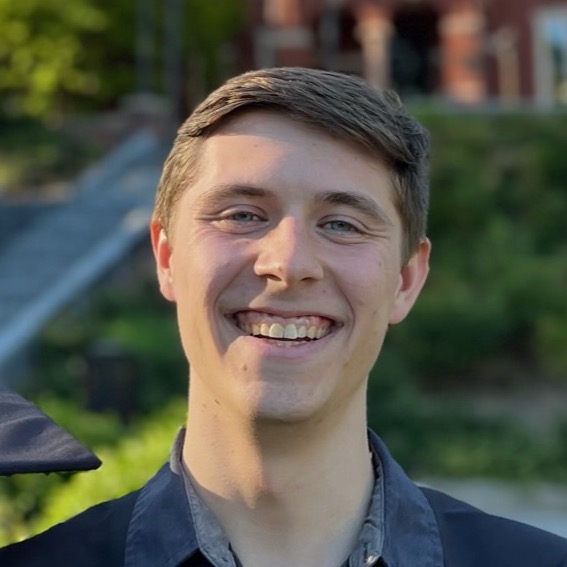
Course Staff
- Tue Jan 9: In-person Lecture: Intro (not recorded)
- Thurs Jan 11: In-person tutorial: Jupyter notebooks
- Just for historical reference: Ken Church's original tutorial Unix for Poets, slides/pages 1-19
- J+M (3ed) Chapter 3, "Language Modeling with N-grams" pages 1-16 (plus section 3.7, "The Web and Stupid Backoff").
- J+M (3ed) Chapter 4, "Naive Bayes and Sentiment Classification" pages 1-14 plus page 18, sections 4.1 through 4.8 and 4.10.
- Optional: Bo Pang, Lillian Lee, and Shivakumar Vaithyanathan. 2002. Thumbs up? Sentiment Classification using Machine Learning Techniques. EMNLP 2002, pages 79--86
- J+M (3ed) Chapter 5, "Logistic Regression" pages 1-17. Page 18 and 21 may also be useful!
- MR+S Chapter 1: Boolean Retrieval (pages 1-17)
- MR+S Chapter 2: Term vocabulary and postings lists (only pages 33-42)
- J+M (3ed) Chapter 14, "QA and IR", just pages 1-6
- MR+S Chapter 6: Scoring, term weighting, and the vector space model, (only pages 100 and 107-116)
- MR+S Chapter 8: Evaluation in Information Retrieval (only pages 139-149)
- Vector Semantics and Embeddings Canvas Videos [slides pptx] [slides pdf]
- Parts of Speech and Named Entities Canvas Videos [slides pptx] [slides pdf]
- Neural Networks Video [slides pptx] [slides pdf]
- J+M (3ed) Chapter 7: Neural Networks (skip section 7.7 on Training Neural Language Models).
- Chat Bot Videos (watch by Monday Mar 4) [slides pptx] [slides pdf]
- Jure Leskovec, Anand Rajaraman, Jeff Ullman. 2014. Mining of Massive Datasets. Chapter 9 3rd edition. pages 319-339 (sections 9.1, 9.2, 9.3; you can skip 9.2.7).
- MR+S Chapter 21: Link Analysis, just pages 421-433 (Skip section 21.3 and 21.4)
- David Easley and Jon Kleinberg. 2010. Networks, Crowds, and Markets: Reasoning About a Highly Connected World. Chapter 2, Sections 3.1-3.3 and Secs 18.1-18.5. Cambridge
- Instructor
-
Dan Jurafsky (jurafsky@stanford.edu)
Office: Margaret Jacks 117
Office Hours: Tuesdays 4:30-5:50 after class except Jan 9. I'm going to try an experiment with individual one-at-a-time in-person office hours, where we have a 10 minute slot and possibly even take a walk outside. We can walk over from class together or you can just come to my office, which is Margaret Jacks 117! - TA Office Hours
-
- [Office hours begin on Saturday Jan 13]
- Mondays: 7:00-9:45pm at Lathrop 299 (except not MLK Day or President's Day)
- Tuesdays: 6:00-8:45pm virtual (details here)
- Wednesdays: 4:30-7:15pm in McMurtry Building ART350
- Thursdays:
- Weeks 3,5,6,9: 3:00-5:45pm Hewlett 200
- Weeks 4,7: 3:00-4:30pm Hewlett 200 + 4:30-5:45pm Hewlett 103
- Weeks 2,10: 4:30-7:15pm Hewlett 200
- Week 8: No regular office hours
- Fridays: 9:00am-11:45am at Gates B12 (except none Week 8)
- Saturdays: 1:00-3:45pm virtual (details here)
- Class Time
-
Tuesday and Thursday 3:00-4:20
- Attendance
-
We require you come to 6 classes: the 4 live lectures and lab #1 and lab #5 and strongly strongly recommend the other 3 labs and 2 tutorials, you will learn more from doing them with other people (I won't require attendance at labs 2/3/4 but I will give extra credit for attending labs 2/3/4). For any lab you miss, you must still do them at home yourself. The course can be taken asynchronously only if you have permission from Dan due to a required conflict or medical issue. Also: different people learn better from different combinations of videos/lectures, reading the chapters, coming to the labs, and coming to office hours. But I will say that students who do all four tend to do the best on quizzes and exams and in the course in general.
-
Alas, we can't reply to email sent to individual staff members. If you have a question that is not confidential or personal, post it on the Ed Discussion forum! Responses are quicker and you'll also be helping others with the same question! To contact the teaching staff directly, come see us in office hours!
If that is not possible, you can also email (non-technical questions) to the course staff list, cs124_requests@lists.stanford.edu. For urgent requests: We check the staff email list very frequently, but please don't worry if you don't hear from us right away. We will do our best to get back to you within a day or so. Just make sure to send an email as soon as you have the request so it's timestamped!
If you have a matter to be discussed privately, come to office hours or use cs124_requests@lists.stanford.edu to make an appointment. For grading questions, please talk to us after class or during office hours.
Class announcements will be on Ed Discussion (although we will occasionally try Canvas and mailing lists). We will assume that everyone reads all announcements.
- Honor Code
-
Since we occasionally reuse homeworks from previous years, we expect students not to copy, refer to, or look at the solutions in preparing their answers. It is an honor code violation to intentionally refer to a previous year's solutions. This applies both to the official solutions and to solutions that you or someone else may have written up in a previous year. It is also an honor code violation to find some way to look at the test set, or to interfere in any way with programming assignment scoring or tampering with the submit script. It's also an honor code violation to use ChatGPT or any automatic coding system to write your code for you.
Since quizzes are a form of assessment, students are not allowed to collaborate on completing quizzes. It is an honor code violation to discuss quiz questions with other students.
CS124 follows the general Stanford policy on generative AI which is that "use of or consultation with generative AI shall be treated analogously to assistance from another person. In particular, using generative AI tools to substantially complete an assignment or exam (e.g. by entering exam or assignment questions) is not permitted", just as having someone do your homework or exams for you is not permitted.
- Textbooks
-
-
There is no required textbook, but I'll expect you to know the textbook/reading material listed above, and will test it on the midterm.
- Online new chapters from Jurafsky and Martin. third edition Jan 2024 draft in progress. Speech and Language Processing.
- Chapters from Manning, Raghavan, and Schutze. 2008. Introduction to Information Retrieval. Cambridge University Press. You can buy the book, get it from the library, or it's also available online *HERE*.
-
There is no required textbook, but I'll expect you to know the textbook/reading material listed above, and will test it on the midterm.
- Course Description
-
Extracting meaning, information, and structure from human language text, speech, web pages, social networks. Introducing methods (string algorithms, edit distance, language modeling, machine learning, logistic regression, neural networks, neural embeddings, inverted indices, collaborative filtering, PageRank), applications (chatbots, sentiment analysis, information retrieval, text classification, social networks, recommender systems), and ethical issues.
- Prerequisites
-
CS106B, Python (at the level of CS106A), CS109 (or equivalent background in probability), and programming maturity and knowledge of UNIX equivalent to CS107 (or taking CS107 or CS1U concurrently).
- Prerecorded Video Lectures
Most weeks, we will ask you to watch a set of video lectures (2 to 2.5 hours total). Most videos will have some in-video questions embedded in them, which you should answer. You are required to watch the videos but the embedded quizzes are not counted toward the final grade.
- In-class Lectures
4 lectures will be live, and are required and the material is fair game on the midterm.
- Labs
There are 5 in-class labs are in which we do group problem-solving activities. The labs are required and will be tested on the quizzes and midterm, meaning that if you can't make a particular in-person lab, you must still do the exercises at home instead. But Lab 1 and Lab 5 are required to be attended in-class; the other 3 you can do at home.
- Automated Review Quizzes
After watching a week's video lectures, we will ask you to answer an open-notes, open-book review quiz (about 5 questions) on the content that you just learned. These quizzes are not timed, they are open book, and they may be attempted an infinite number of times. The questions, as well as the options for each question, are randomly selected from a larger pool each time you take a quiz. You will not see your quiz grade/correct answers until after the due date, but the system will take the the score from the last submission of all your infinitely-allowed submissions for the quiz. So if you worry you might have got something wrong, just submit another one! Review Quizzes for each week are due 11:59pm Tuesday of the following week There are no late days for review quizzes. Because of the strict no-late-day policy, we will drop your lowest scoring quiz (i.e. we will only count your best 7 of the 8 quizzes in your final grade).
- Midterm
There is one online midterm! Details will be posted in week 6.
- Class Participation
You have to watch all lectures, and attendance for the 4 live lectures is required. The labs are required and we will test material from them on the midterm, and labs 1 and 5 must be attended in person. However, attendance for labs 2,3,4 is only strongly recommended; you may do them yourself at home if you really cannot come to class. You can get extra credit for class participation and other things by: Coming to the 5 labs; helpful answers on the class forum, helping out other students in office hours or labs, being the first person to find typos in the textbook (not counting bugs in figure or chapter numbering), speaking up in the labs. Plus there will be extra credit problems on some of the labs and the midterm.
- Programming Assignments
7 Python programming assignments. All are due Fridays at 5pm.
Programming Assignment Collaboration for PA 1-6: You may talk to anybody you want about the assignments and bounce ideas off each other. And if you want, you can also choose a partner and do pair programming for PA 1-6. Pair programming has many advantages for learning!!! You and your pair-partner can discuss code, but it's important that each of you work on each part of the assignment so that you're comfortable with the whole assignment, since assignments build on each other (and we will test concepts from the assignments on the midterm). If you choose to pair-program, you should specify in the submission who your partner is. We will use the normal automatic checks for overlap between your code and other students' code who are not your pair partner.
Programming Assignment Collaboration for PA 7: PA7 is a group homework that must be done in groups. You will work together with your group, and write code together. Groups must be of size 3 or 4. To work in a group of size 2, you must get special permission from the staff. You cannot work by yourself on PA 7, because part of the goal of this homework is to learn to work on group projects. You must describe in your writeup in detail exactly who in your group did what, and who worked on which parts of the assignment/code.
- Late homeworks
You have 4 free late (calendar) days to use on programming assignments 1-6. If you are pair programming, late days are still individual (i.e if one of you has used up late days, and one has not, and you submit a homework late one day, only the student without remaining late days will be penalized). You cannot use late days on PA 7. Once late days are exhausted, any PA turned in late will be penalized 20% per late day. Each 24 hours or part thereof that a homework is late uses up one full late day. However, no assignment will be accepted more than four days after its due date.
- Readings
This class has a significant amount of textbook reading. Most weeks have around 25 textbook pages. The homeworks, quizzes, and midterm will be based heavily on the readings.
- Final grade computation
-
- 65% homeworks (PAs 1-6 are each worth the same, 8% (ignore the different point values for each homework). PA7 is worth 16%, double the others, PA0 is worth 1%.)
- 20% Midterm
- 15% weekly review quizzes
- Final letter grades
-
- Some sort of A: 90% and above of the total points
- (the numerator will include your extra credit, the denominator does not include possible extra credit (otherwise it wouldn't be extra credit))
- A+: 100.000% and above strictly no rounding (i.e., not 99.99% or below)
- Some sort of B: 80% and above
- Some sort of C: 70% and above
- Some sort of A: 90% and above of the total points







Schedule
| Week | Date | Homework | Quiz | In-class | Video Lectures and Readings (to be done by the Monday of the week unless I specify another date) |
|---|---|---|---|---|---|
| 1 | Jan 9, 11 |
PA 0: Setup and Tutorial
Due Fri Jan 12, 5:00pm (We'll also go over this in Thursday Jan 11's in-person tutorial ) | - |
|
Watch before Thursday:
|
| 2 | Jan 16 and 18 |
PA 1: Regular Expressions
Due Fri Jan 19, 5:00pm |
Quiz 1: Text Processing/Edit Distance [quiz 1 on gradescope] Due Tue Jan 16, 11:59pm |
[Lab 1 pptx] [Lab 1 pdf] [Lab 1 quick command ref] [Lab 1 solutions] [secret_ec.txt]
|
Basic Text Processing Canvas Videos (watch videos before Mon Jan 15) [canvas slides pptx] [ canvas slides pdf]Edit Distance Canvas Videos (watch videos before Mon Jan 15) [canvas slides pptx] [canvas slides pdf] |
| 3 | Jan 23 and 25 |
PA 2: Naive Bayes and Sentiment Analysis!
Due Fri Jan 26, 5:00pm |
Quiz 2: Language Modeling/Naive Bayes [gradescope] Due Tuesday Jan 23, 11:59pm |
(watch NB videos beforehand) (don't look at the solution until you've completed all the questions!) [Lab 2] [Lab 2 Solutions]
|
Language Modeling Canvas Videos (watch before Monday Jan 23) [canvas slides pptx] [canvas slides pdf]Naive Bayes and Text Classification Canvas Videos (watch before Monday Jan 22) [canvas slides pptx] [canvas slides pdf] |
| 4 | Jan 30 and Feb 1 |
PA 3: Logistic Regression!
Due Fri Feb 2, 5:00pm |
Quiz 3: Logistic Regression [gradescope] Due Tuesday Jan 30, 11:59pm |
|
|
| 5 | Feb 6 and 8 |
PA 4: Information Retrieval
Due Fri Feb 9, 5:00pm |
Quiz 4: Information Retrieval [gradescope] Due Tuesday Feb 6, 11:59pm |
Chris Manning Canvas Video: Information Retrieval (I) (watch/read before Monday Feb 5)
[canvas slides pptx]
[canvas slides pdf]
| |
| 6 | Feb 13 and 15 |
PA 5: Embeddings and Vector Semantics [starter code] Due Fri Feb 16, 5:00pm. |
Quiz 5: Vector Semantics and Sequence Labelling [gradescope] Due Tue Feb 13, 11:59pm |
Tuesday: Guest Lecture (required and not recorded): Dora Demszky, Graduate School of Education
[slides pdf] Thursday: No class: extra in-person TA office hours during class time in Hewlett 200 |
|
| 7 | Feb 20 and 22 |
PA 6: Neural Networks [starter code] Due Fri Feb 23, 5:00pm |
Quiz 6: Neural Networks [gradescope] Due Tue Feb 20, 11:59pm. |
Tuesday Lab #4: Large Language Models and ChatGPT
Thursday: No class: extra in-person TA office hours during class time in Hewlett 200
|
|
| 8 | Feb 27 and Feb 29 |
Tuesday: Review for Midterm (online)
Thursday: Midterm (online) |
| ||
| 9 | Mar 5 and 7 |
PA 7: Chatbot [starter code] Due Fri Mar 15, 5:00pm |
Quiz 7: Recommendation Systems [gradescope] Due Tues Mar 5, 11:59pm |
Tuesday: Lab #5: PA7 and Git
[Lab 5]
[Lab 5 Solutions]
Thursday: No class: extra in-person TA office hours during class time in Hewlett 200 |
Recommender systems and Collaborative Filtering Canvas videos (watch by Monday Mar 4) [slides pptx] [slides pdf] |
| 10 | Mar 12 and 14 |
Reminder: PA 7: Chatbot due Fri Mar 15, 5:00pm |
Quiz 8: Pagerank and Networks Due Tues Mar 12, 11:59pm |
Tuesday: No class (but no extra office hours) Thursday: Final Lecture from Dan (required and not recorded): "Transformers and Large Language Models" [slides pdf] [slides pptx] |
Web graphs, Links, and PageRank (watch by Mon Mar 11) [slides pptx] [slides pdf]Social Networks Canvas Videos (watch by Mon Mar 11) [slides pptx] [slides pdf] |
Logistics